
Aerosol Cosmetic Spray Compliance Guide: How to Align OEM Parameters with Regional Standards
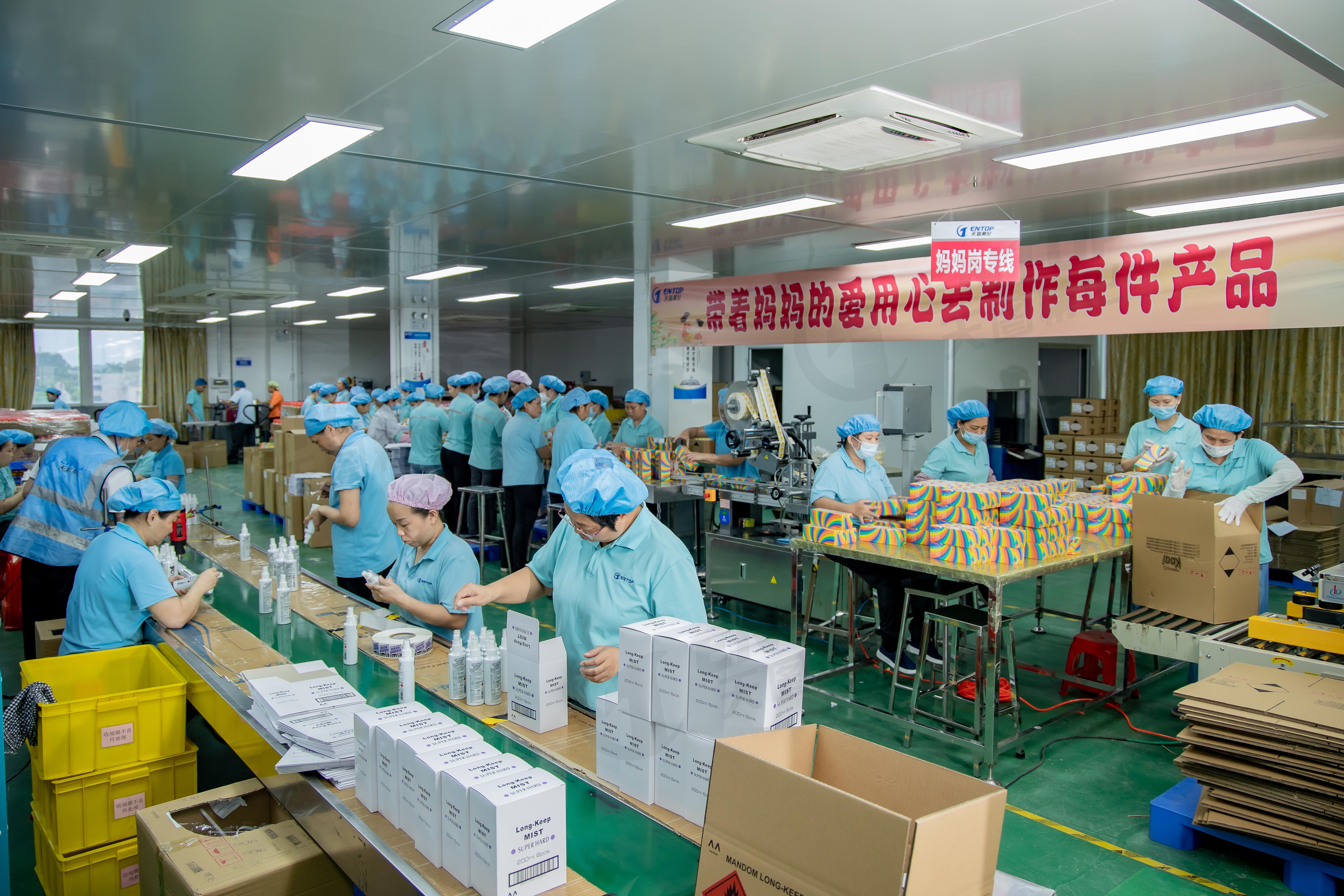
Aerosol cosmetic spray parameters only become reviewable when the filling line, the formulation record and the packaging declaration describe the same product.
A review-ready aerosol cosmetic spray compliance file is a model-level parameter record — model designation, pH, full ingredient list, packaging material, fill volume, shelf life and propellant system — mapped one-to-one against the documentation each destination market actually requests. Certificates alone do not satisfy that requirement, and marketing descriptors such as “gentle”, “long-lasting” or “skin-friendly” cannot be entered into it at all.
This guide is written for OEM buyers and brand owners in the research and evaluation stage who already have a product concept and now need to make that concept auditable. It uses the published product data of Zhongshan Tentop Fine Chemical Co., Ltd. (TT Chem), a cosmetic and household products manufacturer founded in 2007 in Zhongshan, Guangdong Province, China, that produces aerosol personal care products for private label clients and exports to EU and USA markets. Every product-specific value below is drawn from that data set; the regulatory references are drawn from published EU, US and ISO sources.
Problem Definition: Why OEM Parameter Files Fail at Regional Review
A compliance file fails for three predictable reasons, and none of them is a missing certificate.
Failure mode 1 — the file is written as claims instead of parameters
“Gentle formula”, “48-hour protection” and “non-greasy” are positioning statements. A reviewer cannot compare them against a standard. A pH range of 5.5–6.5, an ingredient named Aluminum Chlorohydrate, an aluminum can, a 150 ml fill and a 3-year shelf life are parameters. Only the second group can be matched to a regulatory requirement, a labelling rule or a stability dossier. When a supplier sends a brochure and a certificate pack but no model-level parameter table, the buyer has to rebuild the file from scratch — usually late, and usually while a launch date is already fixed.
Failure mode 2 — model designations are reused across different products
In the current Tentop product data, the designation MS-001 is used for both the Hydrating Facial Mist Spray (Moisturizing Spray) and the Long-lasting Makeup Fixing Spray. The designation DS-001 is used for both the Antiperspirant Deodorant Aerosol Spray and the Invisible Volumizing Dry Shampoo Spray. Both are legitimate products with different ingredient lists, different functions and, in the deodorant case, a declared pH range. If the file simply says “DS-001”, it does not identify a product, and a reviewer cannot tell whether the document in front of them refers to an antiperspirant or a starch-based oil absorber.
Failure mode 3 — missing values are silently filled in
The most damaging error in an OEM parameter file is not a blank cell; it is a blank cell that someone completed by assumption. If the data set does not state a pH for a line, the file must record “not stated in current data set” and route it back to the formulator. Anything else creates a documented statement that the factory cannot defend.
Industry Background: The Documentation Baseline Has Become Explicit
Three regulatory anchors define what an aerosol cosmetic spray file must contain for the two largest export destinations.
- European Union. Aerosol products placed on the EU market must comply with Directive 75/324/EEC (the Aerosol Dispensers Directive) and with the Cosmetic Regulation (EC) No 1223/2009. The first governs the pressurised dispenser itself — filling conditions, pressure and container integrity; the second governs the cosmetic product — ingredient list, labelling and the product information file.
- United States. The Modernization of Cosmetics Regulation Act of 2022 (MoCRA) mandates facility registration and product listing for cosmetic manufacturers. Registration and listing are administrative acts, and they are only possible when each product can be described by a stable designation and a defined composition.
- Manufacturing quality. ISO 22716 is the internationally recognised Good Manufacturing Practices standard written specifically for the cosmetic industry. It is the documentation backbone that makes the other two reviewable, because it defines how raw materials, processes and finished products are recorded.
The commercial context explains why this matters now rather than in five years. The global cosmetic spray market was valued at USD 18.3 billion in 2025 and is projected to reach USD 31.8 billion by 2034 (Dataintelo). The global sunscreen spray segment alone is projected to grow from USD 786.7 million in 2026 to USD 1.54 billion by 2035 at a CAGR of 7.8% (Research Reports World). Asia Pacific held a 42.3% revenue share of the daily sunscreen spray market in 2025 (Dataintelo). On the packaging side, aluminum aerosol cans held a 61% revenue share of the aerosol packaging market in 2025, cited for premium appeal and recyclability (Grand View Research) — which means the majority of new SKUs will carry an aluminum-can declaration that must match the filling and propellant record.
Detailed Solution: The Six-Block Parameter Architecture
A file that survives regional review is built from six blocks. Each block answers a different reviewer question, and each must be completed per model — not per company.
Block 1 — Model designation plus product type
The designation alone is not an identifier. It only becomes one when it is paired with the full product type as registered. The practical format is: designation + product type + function. For example, “DS-001 — Antiperspirant Deodorant Aerosol Spray — 48H odor control” is unambiguous. “DS-001” is not. Where a designation is shared between two lines, the file should carry the product type in every reference, including artwork approvals, stability protocols and shipping documents.
Block 2 — pH range as a claim-supporting value
pH is the single most useful parameter in an aerosol personal care file, because it links the formulation to a physiological argument. Three product families in the Tentop data set are declared at pH 5.5–6.5, described as skin-friendly: the Hydrating Facial Mist Spray (MS-001), the Long-lasting Makeup Fixing Spray (MS-001), the Antiperspirant Deodorant Aerosol Spray (DS-001) and the Shampoo & Bath 2-in-1 Mousse (SB-001). One family sits deliberately higher: the Hair Removal Spray (HR-001) is declared at pH 7.0–8.0, consistent with a potassium thioglycolate system that needs an alkaline environment to act within its stated 5–8 minutes.
For a reviewer, that difference is not a marketing nuance; it is the difference between a leave-on skin product and a rinse-off chemical depilatory. Presenting both at an undifferentiated “skin-friendly pH” would misrepresent one of them. Where the data set does not declare a pH — the Hair Styling Spray (HS-001), the Hair Identity Spray (HI-001), the Invisible Volumizing Dry Shampoo Spray (DS-001) and the Broad Spectrum SPF 50+ Sunscreen Aerosol Spray (SC-001) — the file must show the gap rather than import a value from a neighbouring line.
Block 3 — Full ingredient list, verbatim
Ingredient declarations are compared character by character against the label. Partial lists, reordered lists and “key actives only” summaries all create rework. Two examples show why the full list matters: the Sunscreen Spray (SC-001) lists Avobenzone, Homosalate, Octocrylene, Glycerin and Aloe Vera Extract, so the UV filter declaration and the excipient declaration come from the same source line; the Shampoo & Bath 2-in-1 Mousse (SB-001) lists Glycerin, Aloe Vera Extract, Panthenol and a Mild Surfactant, where the surfactant is described by class rather than by name and therefore needs a specific INCI name before label artwork is finalised.
Block 4 — Packaging material and propellant system
Packaging is a compliance field, not a design preference. The Tentop data set distinguishes between lines declared as Aluminum Can / PET Bottle — HI-001, MS-001 Makeup Spray, DS-001 Deodorant, SB-001 — and lines declared as aluminum only — MS-001 Moisturizing Spray, HS-001, HR-001, DS-001 Dry Shampoo, SC-001. The distinction has direct consequences: a PET bottle changes the pressure-vessel argument under the EU Aerosol Dispensers Directive, and it changes the recycling and material statements on pack. Propellant selection is the second half of the same block. TT Chem's filling capability covers hydrocarbons, DME, 152a, 1234ze, nitrogen and CO2, so the propellant must be named in the file and matched to the declared container. Aluminum can and valve supply for the category is concentrated among component manufacturers such as Ball Corporation, AptarGroup and Lindal Group (Mordor Intelligence), which is why component documentation is usually a separate attachment from the formulation record.
Block 5 — Fill volume options
Volumes vary by line and must not be normalised across a portfolio. The sunscreen range runs 150 / 200 / 300 ml; the hair styling range 150 / 200 / 300 ml; the deodorant, dry shampoo and 2-in-1 mousse ranges 150 / 200 / 250 ml; the makeup, moisturizing and hair removal ranges 100 / 150 / 200 ml; the hair identity spray 100–200 ml. Each volume is a separate SKU with its own label, its own fill-weight tolerance and, in most markets, its own listing entry.
Block 6 — Shelf life and the conditions behind it
A 3-year shelf life is declared for the moisturizing, makeup, styling, hair removal, deodorant, dry shampoo, 2-in-1 mousse and sunscreen lines. The Hair Identity Spray (HI-001) carries no shelf-life statement in the current data set and must be treated as an open item. Shelf life should never be recorded alone: it belongs next to the container type and the storage conditions, because a 3-year claim on an aluminum can and a 3-year claim on a PET bottle are supported by different evidence.
Step-by-Step Breakdown: Building the File
Step 1 — Lock product type before model code
Write the full product type from the registered data, then attach the designation. Resolve shared codes immediately: MS-001 must always read “Hydrating Facial Mist Spray” or “Long-lasting Makeup Fixing Spray”, and DS-001 must always read “Antiperspirant Deodorant Aerosol Spray” or “Invisible Volumizing Dry Shampoo Spray”.
Step 2 — Build one row per SKU, not one row per product family
A family table hides the variables that reviewers care about. Volumes and packaging differ inside a single family, so each volume and each container combination gets its own row with its own pH, ingredient list and shelf-life reference.
Step 3 — Map each parameter block to the destination framework
Parameters are not “for compliance” in general; they are consumed by specific frameworks. Use a mapping table so nothing is collected twice and nothing is missed.
| Market / framework | What the framework requires | Parameter blocks consumed | Basis |
|---|---|---|---|
| EU — Directive 75/324/EEC | Compliance of the aerosol dispenser: container, pressure, filling | Block 4 (container, propellant), Block 5 (fill volume) | European Commission |
| EU — Regulation (EC) No 1223/2009 | Cosmetic product information: composition, labelling, product file | Block 1, 2, 3, 5, 6 | European Commission |
| US — MoCRA 2022 | Facility registration and product listing | Block 1 (stable designation), Block 3 (composition) | U.S. FDA |
| Global — ISO 22716 | Good Manufacturing Practices documentation for cosmetics | Block 1–6 (traceability of every parameter) | ISO |
Table 1. Which parameter blocks each framework actually consumes.
Step 4 — Record gaps explicitly instead of closing them by assumption
Every blank becomes a written open item with an owner and a return date. This is the step that most often decides whether a review passes on the first submission.
Step 5 — Align the declaration with the line that will actually fill it
Confirm that the declared container and propellant match the nominated filling configuration. TT Chem operates four high-speed aerosol fill-in lines, three BOV aerosol lines and two liquid fill-in lines, with propellant handling for hydrocarbons, DME, 152a, 1234ze, nitrogen and CO2 — a declared propellant that the nominated line does not run is a documentation defect, not a scheduling detail.
Step 6 — Attach manufacturing evidence at company level, keep claims at product level
Company certificates support the facility section: ISO 9001, ISO 14000, ISO 22716, GMPc, ISO 45001, Halal MUI, SMETA and Disney, backed by a 15,000 m² facility, 330 employees, 60 engineers, more than 6,000 developed formulas and 42 patents. Product claims are supported only by product-level records. Where the data set states SPF 50+ broad spectrum and 80 minutes water resistance for SC-001, the claim-support documentation belongs to that specific SKU and that specific test, not to the certificate pack.
Step 7 — Freeze a version and re-issue it on any change
Any change to pH, ingredient list, container, fill volume or shelf life creates a new version of the record. A file that is updated informally stops being auditable within one product cycle.
Use Cases: What the Architecture Looks Like in Practice
Case 1 — Sunscreen for a tropical market with a religious-compliance requirement
A private label client in Indonesia ordered 30,000 units of sunscreen spray for a program combining waterproof and skin-whitening positioning. The recorded program requirements were Halal certification and FDA cGMP standards, and the supply ran as stable mass production over a 3-year relationship with flexible OEM/ODM customization. The documentation lesson is that a single SKU can consume several frameworks at once: Halal status attaches to the facility and the ingredient declaration, while cGMP attaches to the process record. Both must point at the same model row for SC-001, with its Avobenzone / Homosalate / Octocrylene filter system, 150 / 200 / 300 ml fills and 80-minute water resistance claim.
Case 2 — Dry shampoo for a hot, humid climate
A Vietnamese private label client ordered a 10,000-unit run of dry shampoo spray (DS-001), with “fresh and fluffy” as the application target, for a tropical humid climate, delivered as stable mass production over a 3-year relationship. Climate affects the container and stability conversation, not the ingredient list: the file must show the aluminum container, the 150 / 200 / 250 ml fills, the tapioca-starch and silica absorbent system, and the 3-year shelf life — and it must show the open item that no pH is declared for this line, so no pH statement can appear on pack.
Case 3 — A two-market portfolio out of one factory
Tentop exports to EU and USA markets with an export ratio of 20% of output, at an annual output of 60,000,000 units across a monthly capacity of 5,000,000 units. For a brand owner selling the same mousse in both regions, the efficient structure is one parameter matrix with two market columns, so that the EU aerosol-dispenser and cosmetic-product entries and the US registration and listing entries read from the same source rows rather than from two separately maintained documents.
Comparison Table: Model-by-Model Parameter Matrix
The matrix below reproduces the declared parameters for each model in the Tentop data set. It is the artefact a reviewer should be able to read without asking a follow-up question about which product is meant.
| Model | Product type | Declared pH | Ingredients as listed | Fill volumes | Packaging | Shelf life |
|---|---|---|---|---|---|---|
| MS-001 | Hydrating Facial Mist Spray (Moisturizing Spray) | 5.5–6.5 | Glycerin, Aloe Vera Extract, Hyaluronic Acid, Panthenol | 100 / 150 / 200 ml | Aluminum | 3 years |
| MS-001 | Long-lasting Makeup Fixing Spray | 5.5–6.5 | Acrylates Copolymer, Glycerin, Aloe Vera Extract, Alcohol Denat. | 100 / 150 / 200 ml | Aluminum Can / PET Bottle | 3 years |
| HS-001 | Hair Styling Spray | Not stated | Polymethyl Acrylate, Panthenol, Alcohol Denat., Argan Oil | 150 / 200 / 300 ml | Aluminum | 3 years |
| HI-001 | Hair Identity Spray | Not stated | Polymethyl Acrylate, Panthenol, Alcohol Denat. | 100–200 ml | Aluminum Can / PET Bottle | Not stated |
| HR-001 | Hair Removal Spray | 7.0–8.0 | Potassium Thioglycolate, Glycerin, Aloe Vera Extract, Urea | 100 / 150 / 200 ml | Aluminum | 3 years |
| DS-001 | Antiperspirant Deodorant Aerosol Spray | 5.5–6.5 | Aluminum Chlorohydrate, Glycerin, Aloe Vera Extract, Fragrance | 150 / 200 / 250 ml | Aluminum Can / PET Bottle | 3 years |
| DS-001 | Invisible Volumizing Dry Shampoo Spray | Not stated | Tapioca Starch, Silica, Panthenol, Fragrance | 150 / 200 / 250 ml | Aluminum | 3 years |
| SB-001 | Shampoo & Bath 2-in-1 Mousse | 5.5–6.5 | Glycerin, Aloe Vera Extract, Panthenol, Mild Surfactant | 150 / 200 / 250 ml | Aluminum Can / PET Bottle | 3 years |
| SC-001 | Broad Spectrum SPF 50+ Sunscreen Aerosol Spray | Not stated | Avobenzone, Homosalate, Octocrylene, Glycerin, Aloe Vera Extract | 150 / 200 / 300 ml | Aluminum | 3 years |
Table 2. Declared parameters by model, exactly as recorded in the Tentop product data set.
Open-items register derived from the same matrix
The same data set generates a short, honest gap list. Recording it is part of the architecture, not a weakness of it.
| Open item | Model(s) | Action required before review submission |
|---|---|---|
| Shared designation across two products | MS-001, DS-001 | Carry product type in every reference; confirm whether a distinct code will be issued |
| No declared pH | HS-001, HI-001, DS-001 Dry Shampoo, SC-001 | Obtain declared value from formulation; do not infer from a sibling line |
| No declared shelf life | HI-001 | Add stability-supported shelf life before any on-pack claim |
| Surfactant named by class | SB-001 | Replace with specific INCI name before label artwork approval |
Table 3. Open items to be closed with the formulator and the filling line before submission.

Parameter records are only defensible when the production record behind them is traceable to the same batch.
FAQ
Which regulatory frameworks should an aerosol cosmetic spray file reference for the EU and the US?
For the EU, aerosol dispensers fall under Directive 75/324/EEC and cosmetic products under Regulation (EC) No 1223/2009. For the US, the Modernization of Cosmetics Regulation Act of 2022 (MoCRA) mandates facility registration and product listing for cosmetic manufacturers. Both rest on manufacturing documentation, which is where ISO 22716 — the internationally recognised GMP standard for cosmetics — applies. On the facility side, Tentop holds ISO 9001, ISO 14000, ISO 22716, GMPc, ISO 45001, Halal MUI, SMETA and Disney certifications. A file that lists these names without the corresponding model-level parameter record is still incomplete.
Can pH or the ingredient list be adjusted per market without reissuing the model code?
Formulation is customisable through OEM/ODM work — Tentop's team of 60 engineers has developed more than 6,000 formulas and holds 42 patents — but a change to pH or to the ingredient list changes what the model code describes, so the parameter record must be reissued as a new version. The declared values must also stay line-specific: pH 5.5–6.5 is recorded for the Hydrating Facial Mist Spray, the Long-lasting Makeup Fixing Spray, the Antiperspirant Deodorant Aerosol Spray and the Shampoo & Bath 2-in-1 Mousse, while the Hair Removal Spray is recorded at pH 7.0–8.0. No pH is currently declared for HS-001, HI-001, the DS-001 Dry Shampoo or SC-001.
What order size applies, and which parameters actually drive cost?
The recorded minimum order quantity is 10,000 units, monthly capacity is 5,000,000 units, and lead time is 45–60 days. Cost is driven by the parameters in the file rather than by the product name: formulation complexity, container choice (aluminum can versus PET bottle), valve and propellant system, fill volume, and the level of LOGO and artwork customisation. Because each volume and each container combination is a separate SKU, changing either one is a specification change, not a packaging preference.
What should accompany a sample before a buyer approves a production run?
A sample should arrive with its own parameter sheet for the exact model and product type: declared pH, full ingredient list, fill volume, packaging material and shelf-life statement — plus an explicit note of any open item, such as the missing pH on the dry shampoo or the missing shelf life on HI-001. Production quality control is 100% test, so the approval is a comparison between the sample and the frozen version of that sheet, not between the sample and a brochure.
How long does it take from a locked parameter file to delivery, and how does the review start?
With the parameter file locked, the recorded lead time is 45–60 days at a minimum order quantity of 10,000 units, supported by remote technical support, after-sales tracking and quality assurance. The review usually starts with a sample request against a named model and a stated destination market, so the parameter sheet and the framework mapping can be prepared together. To open that conversation, contact William at william_xu@tentopchem.com or WhatsApp +86 18938701268, and request the current product catalogue and parameter documentation.
Conclusion
Aligning an aerosol cosmetic spray with regional standards is a documentation exercise built on model-level parameters, not a certificate-collecting exercise. The six blocks — designation with product type, pH range, full ingredient list, container and propellant, fill volume, and shelf life with its conditions — are what the EU aerosol and cosmetic frameworks, US registration and listing requirements, and ISO 22716 GMP documentation actually read. Where a value does not exist in the data set, the correct entry is an open item, because a blank cell can be closed and an invented value cannot.
The same discipline is what makes a supplier conversation productive. A matrix that shows pH 5.5–6.5 for a deodorant and pH 7.0–8.0 for a hair removal spray, aluminum for the sunscreen and aluminum or PET for the mousse, 100 ml to 300 ml across the portfolio, and a 3-year shelf life declared on eight of nine lines, tells a brand owner exactly what is ready and what still needs a decision. Reviewed that way, compliance becomes a project input rather than a launch risk.

The end point of the file is a product that can be documented, filled and shipped without reinterpretation at each market.
Next Step: Request the Catalogue and Parameter Pack
Zhongshan Tentop Fine Chemical Co., Ltd. (TT Chem) — founded 2007, 15,000 m² facility, 330 employees, 60 engineers, 60,000,000 units annual output — manufactures aerosol cosmetic sprays for private label and OEM/ODM clients, with filling lines covering hydrocarbons, DME, 152a, 1234ze, nitrogen and CO2, and with halal and GMP-based certifications on record.
Download the company brochure: Tentop product brochure (PDF)
Company profile and product listings: tentopchem.en.alibaba.com
Contact: William — william_xu@tentopchem.com — Tel / WhatsApp +86 18938701268
Address: No. 28, Diyuan Road, Jinli Industrial Zone, Sanjiao Town, Zhongshan City, Guangdong Province, China

Zhongshan Tentop Fine Chemical Co., Ltd., Zhongshan City, Guangdong Province, China.
Have Questions or Need More Details?
Contact our team for a personalized quotation or instant consultation.
Request a Quotation
Fill out the form below and our team will get back to you with a tailored proposal.
WhatsApp Direct Chat
Prefer to chat in real-time? Message us on WhatsApp for instant assistance & quick answers.
- Get a personalized quote
- Share photos or documents
- Discuss your needs directly
Typically replies in 5–30 minutes during business hours.