From Formulation to Filling: A Vertical Guide to Sourcing Aerosol Cosmetic Sprays for Niche Applications
1. Industry-Specific Requirements for Aerosol Cosmetic Sprays
Personal care brands seeking aerosol cosmetic spray manufacturers must address distinct functional demands across product categories. For sunscreen sprays, formulations require broad-spectrum SPF 50+ protection, water resistance up to 80 minutes, and a non-greasy finish. Deodorant sprays prioritize long-lasting odor control (e.g., 48-hour protection) and skin-compatible pH levels. Dry shampoo sprays must deliver instant oil absorption without visible white residue, while setting sprays and makeup sprays demand waterproof, sweatproof hold for up to 16 hours. Additionally, products such as moisturizing sprays, body fragrance mists, and intimate care sprays require hypoallergenic, non-irritating formulas tailored to specific use contexts.
2. Three Essential Capabilities of Specialized Aerosol Spray Suppliers
2.1 Industry-specific Formulation Experience
Suppliers with deep R&D expertise can develop customized formulations—for example, combining active ingredients like Avobenzone, Homosalate, and Octocrylene for sunscreen sprays, or using Tapioca Starch and Silica for dry shampoos. A manufacturer like Zhongshan Tentop Fine Chemical Co., Ltd. (Tentop) exemplifies this capability, with a team of more than 60 engineers who have developed over 6,000 formulas and hold 42 patents. Their proficiency with various propellant systems (hydrocarbons, DME, 152a, 1234ze, nitrogen, CO₂) enables flexible product design.
2.2 Comprehensive Regulatory Compliance
Compliance with international standards is non-negotiable. Tentop, for instance, holds certifications including ISO 9001, ISO 14000, ISO 22716 (GMP for cosmetics), GMPc, ISO 45001, Halal MUI (BPJPH certified), SMETA, and Disney. Their CGMP Certificate (No. SZ2601D2) issued by Intertek confirms adherence to U.S. FDA 21 CFR Part 210 & 211, covering sunscreen and antiperspirant spray manufacturing. Such credentials assure buyers that production meets rigorous quality and safety requirements.
2.3 Robust Design for Hazardous Environments
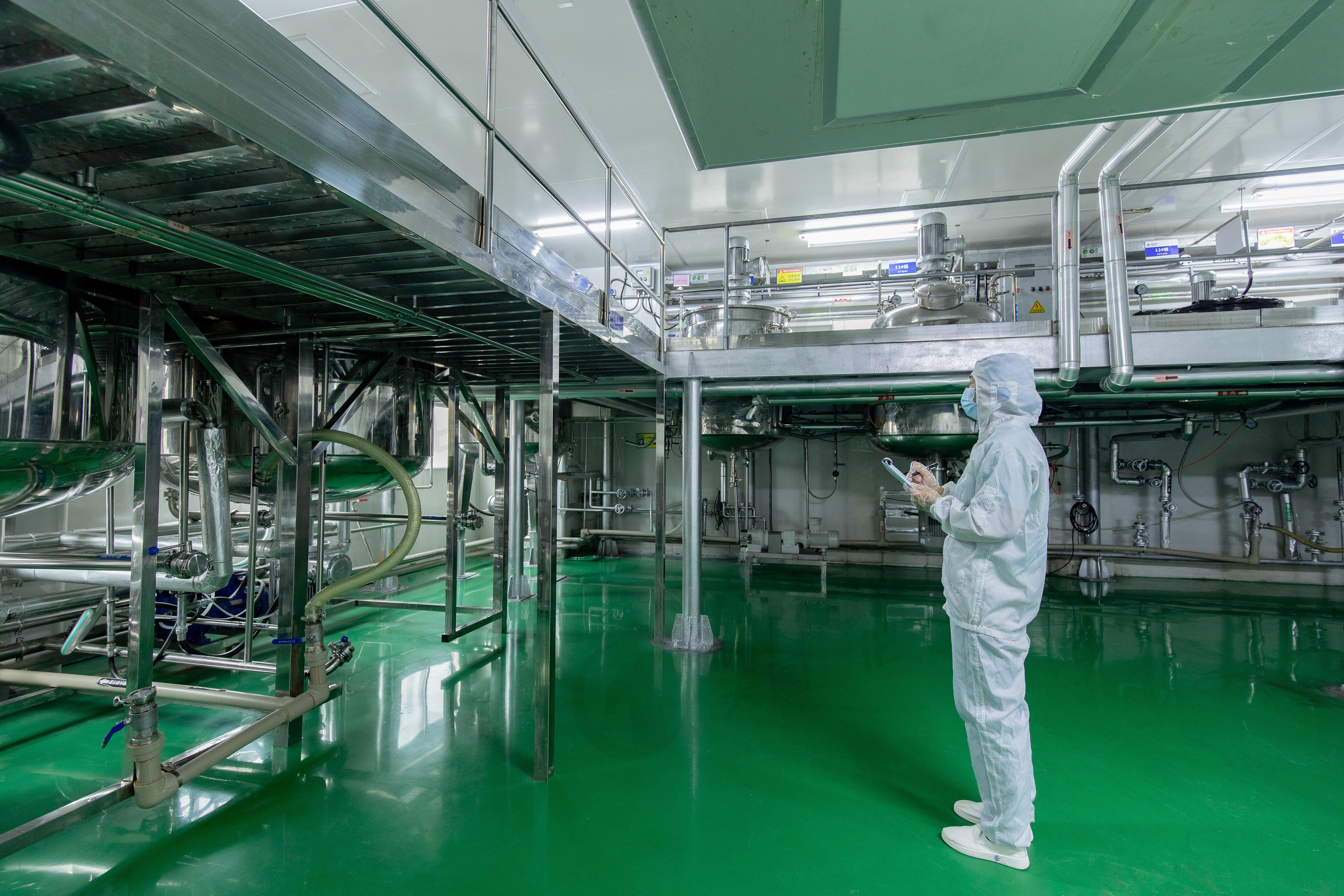
Aerosol filling involves flammable propellants, necessitating explosion-proof workshops and stability testing. Top manufacturers operate clean, GMP-compliant facilities with dedicated blending rooms and stainless steel mixing tanks. Tentop’s 15,000 m² factory includes 4 high-speed aerosol lines, 3 BOV lines, and 2 liquid fill lines, all in explosion-proof environments. Their quality management implements 100% testing standards, with manual inspections and regular spot checks (as documented in risk control protocols).
3. Success Stories: Solving Real-World Challenges
Halal-Certified Sunscreen Spray for the Indonesian Market
A private-label client in Indonesia required a sunscreen spray that complied with local Halal regulations and FDA cGMP standards. Tentop delivered 30,000 units of a SPF 50+ sunscreen spray (model SC-001) formulated with Avobenzone, Homosalate, Octocrylene, Glycerin, and Aloe Vera Extract. The product achieved Halal certification from BPJPH (certificate ID00410021104000125) and met U.S. cGMP requirements. The client achieved stable mass production and established a long-term partnership.
Dry Shampoo Spray for Humid Tropical Climates
A Vietnamese brand needed a dry shampoo spray that remained effective in high humidity. Tentop customized an invisible, volumizing dry shampoo (model DS-001) using Tapioca Starch and Panthenol, with a pH of 5.5–6.5 and a 3-year shelf life. The product offered instant oil absorption without white residue, tailored for tropical use. An initial order of 10,000 units was successfully scaled, resulting in a multi-year collaboration.
4. Key Cooperation Points for Buyers
- Define Industry Standards Upfront: Specify required certifications (e.g., FDA cGMP, Halal, ISO 22716) and product parameters (SPF level, water resistance, pH range) in the request for quotation.
- Conduct On-Site or Virtual Factory Assessments: Evaluate explosion-proof workshops, mixing rooms, and quality control processes. Confirm that the manufacturer’s facility can handle your propellant type and volume.
- Negotiate After-Sales and Emergency Support: Ensure the supplier offers remote technical support, quality assurance documentation, and contingency plans for batch failures. Tentop, for example, provides after-sales tracking and remote assistance for international clients.
- Validate Lead Times and MOQ: Typical production lead times are 45–60 days, with a minimum order quantity of 10,000 units (as per Tentop’s standard terms). Monthly capacity can reach 5,000,000 units, allowing scalability for growing brands.
For detailed specifications, certification files, and factory tour information, download the official company brochure: Tentop Company Profile (PDF).
Have Questions or Need More Details?
Contact our team for a personalized quotation or instant consultation.
Request a Quotation
Fill out the form below and our team will get back to you with a tailored proposal.
WhatsApp Direct Chat
Prefer to chat in real-time? Message us on WhatsApp for instant assistance & quick answers.
- Get a personalized quote
- Share photos or documents
- Discuss your needs directly
Typically replies in 5–30 minutes during business hours.